MS Excel & Python
I've spoken about and used Python in previous projects, but haven't highlighted the awesome application and usefullness of Excel. Alot of the time, within the world of data, we quickly start talking about programming and yes this is necessary for Big Data especially (this is the case for most large corporates), however, for the smaller to medium size businesses so much value can still come from Excel for data analysis.
Lets take this bakery as a example. Mr Baker has daily sales but makes most of his/her money from seasonal events, held at the same time every year, some bigger than others. He/she wants to understand where sales drop at its lowest, over time, so that he/she can implement a business intervention to improve the current state of business.
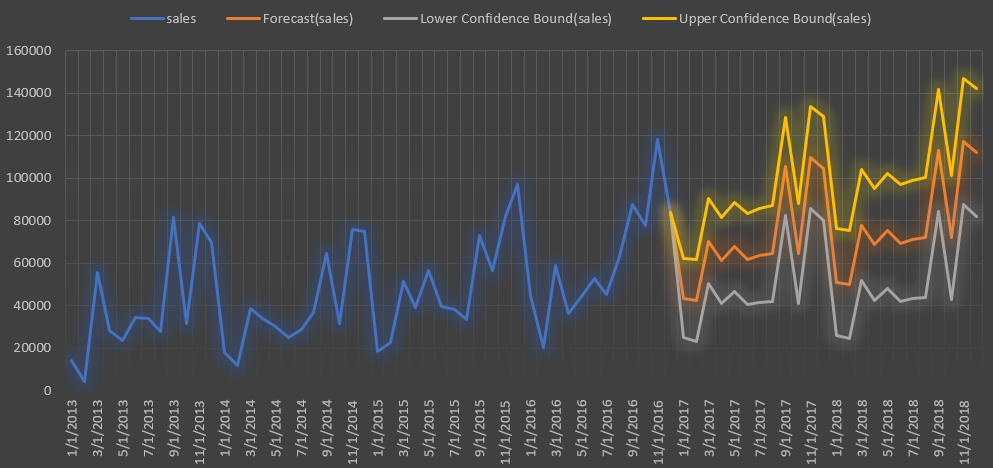
Using the Forecast Sheet in Excel to predict sales for the next two years. Also, I added some extra cosmetics to the graph.
Now lets try Python.
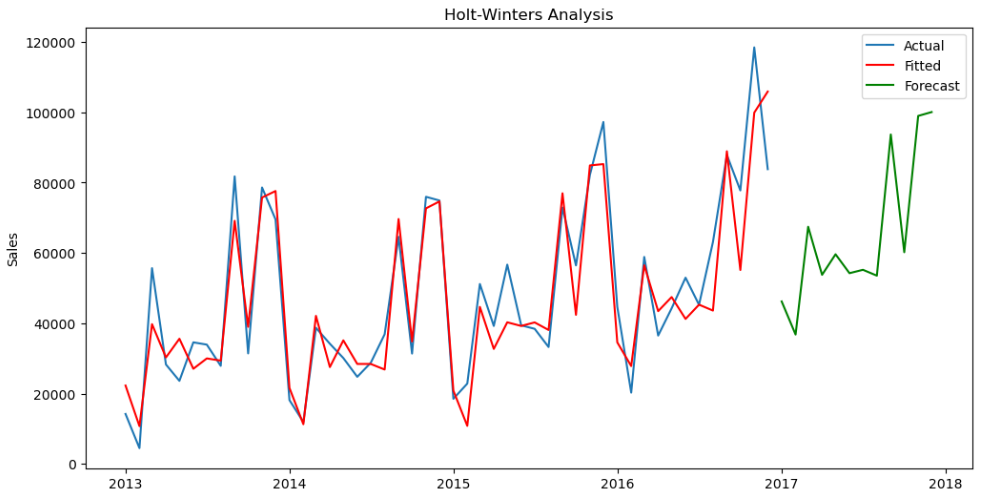
Almost an identical prediction right? Shows how powerful both tools are when performing a time series analysis. Two significant differences worth mentioning are; firstly, MS Excel can be uesd by most people and is generally user-friendly as opposed to Python where you will need programming capability. Secondly, Excel is limited to 1 000 000 data entries (rows) so when that is maxed out (or when dealing with big data), Python becomes necessary.
Data informing decision-making
As seen in the time series analysis, Mr Baker the same of amount of money through certain time periods in the year, with a general increase in income made year on year (Mr Baker attributes this to the growing popularity of his/her bakery). However, as seen in the trend for the next two years between the 2nd and 3rd quarter of the year, if a change is not made, sales will remain on the gradual increase as seen in the years before. Mr Baker is actually relieved, he/she is happy with the gradual increase, but believes a small intervention, like the introduction of two or three new products, may bolster sales during this period.
This is how data supported Mr Baker to understand and pin-point when, where and how his/her intervention should be implemented.